XT Appliances · Hazel Park, next door to Warren
Dishwasher repair in Warren, MI
Standing water in the bottom, dishes that come out dirty, leaks and dishwashers that won't start. A technician diagnoses it at your home, and you approve the price in writing before any work.
- 25% off for seniors and veterans
- 90-day warranty
- Same-day most weekdays
What's your dishwasher doing?
Pick the closest match to see what usually causes it and what's safe to check first.
Won't drain
Often the water's way out is blocked at the filter or under the sink, and otherwise the drain pump has jammed or failed.
What it usually is
- Clogged filterThe filter under the bottom rack catches food before it reaches the pump. Packed full, it holds water in the tub, and you can usually see scraps and grit sitting on it.
- Knockout plug in a new garbage disposalA new disposal comes with a plug in its dishwasher inlet that has to be knocked out when it's installed. If the draining trouble started right after a disposal went in, that plug is the likely cause.
- Clogged air gap or kinked drain hoseWater spitting out of the air gap beside the faucet, or backing up into the sink when the dishwasher drains, means the air gap or the hose past it is restricted. The pump is working; the path is blocked.
- Drain pumpThe pump pushes the water out at the end of each cycle and can jam on broken glass or a fruit pit. A pump that hums but moves no water is usually jammed rather than burned out.
- Drain check valveA one-way flapper stops drained water from flowing back into the tub. If you hear the pump running but the tub never empties, or a little dirty water keeps coming back, the flapper is likely stuck.
Try this first
- Lift out the bottom rack, remove the filter and rinse it under the tap until the mesh is clear.
- If it drains through the garbage disposal, run the disposal first, and if the disposal is new, make sure its dishwasher knockout plug was removed.
- If your sink has an air gap (the small cap beside the faucet), lift the cap off and clear out any food packed inside.
- Under the sink, check that the drain hose isn't kinked or crushed by anything stored there.
Stop using it and call now if
- Water coming through the floor or into the cabinets
- A glass broke in the tub and the pump now hums or grinds (don't reach into the sump)
- A burning smell
Dishes come out dirty
Usually a clogged filter or blocked spray arms, and less often a detergent cup that never opened or a weak wash pump.
What it usually is
- Clogged filterA packed filter can't hold food back, so it gets sprayed onto the dishes again. Grit or a sandy film on glasses, with scraps sitting on the filter, points here.
- Clogged or stuck spray armsJets blocked with food or hard-water scale leave stripes unwashed, and an arm that can't spin only washes what sits right above it. Dirty patches in the same spots every time point here.
- Detergent dispenser not openingIf detergent is still sitting in the cup when the cycle ends, the dispenser door never opened and the load washed in plain water. The pump and arms are probably fine.
- DiverterThe diverter sends water to the upper and lower arms in turns. When one rack comes out clean and the other doesn't, and both arms are clear, it's likely stuck on one level.
- Wash pumpThe wash pump pressurizes the water that feeds the arms. If the dishwasher fills and drains but never sprays, or the pump hums with no wash action, both racks stay dirty.
Try this first
- Remove the filter under the bottom rack and rinse it until the mesh is clear.
- With the racks loaded, turn each spray arm by hand to make sure no tall item or pan handle stops it.
- Look for food or white scale in the spray arm jets and clear them with a toothpick.
- After a cycle, check the detergent cup: soap still sitting there means the dispenser door never opened.
Stop using it and call now if
- A loud grinding during the wash that doesn't go away after you clean the filter
- A burning smell
Leaking
Where the water shows up usually names the part: down the front points at the door seal, underneath points at the inlet valve or the sump.
What it usually is
- Door gasketThe rubber seal around the door keeps the wash water inside. Water running down the front of the door, or pooling right at its bottom edge, points at a gasket that has torn or worked loose.
- Water inlet valveThe valve lets house water in at each fill. A leak that shows up underneath on the side where the water line comes in points at the valve or its connection.
- Sump gasketThe sump sits at the lowest point of the tub and seals to the tub floor with a gasket. A leak under the middle of the dishwasher, away from the door and the supply side, points at that gasket or a cracked sump.
- Overfilling from a stuck float or inlet valveA float tells the control when the tub is full. If it sticks, or the inlet valve won't shut off, the water keeps rising until it gets past the door.
- Regular dish soap in the detergent cupDish soap made for hand washing foams far more than dishwasher detergent, and the suds push out past a good door seal. A floor covered in foam points here.
Try this first
- Dry the floor, run a short cycle and watch where the water first appears.
- Look over the door gasket for tears or sections that have pulled out of their channel.
- Use only detergent made for dishwashers, never regular dish soap.
Stop using it and call now if
- Water coming through the floor or into the cabinets
- Water near an outlet or wiring under the sink
- The breaker trips every time it runs
Won't start
Most often the door latch isn't telling the control the door is shut, and a completely dark panel means a power problem instead.
What it usually is
- Door latch or door switchThe control won't start a cycle until the latch switch reports the door shut. A panel that lights up with a flashing start or door light, while the door is closed, points at the latch.
- No power at the breaker or connectionA dishwasher with no lights and no beep at all isn't getting power. That can be a tripped breaker, a loose connection where it's wired in, or a blown thermal fuse inside.
- Anti-flood floatA float in the pan under the tub shuts the dishwasher off and runs the drain pump nonstop when water collects there. If it won't start and the pump keeps running, a leak tripped it or the float is stuck.
- TouchpadWhen the panel lights but the buttons don't register, or one needs a hard press or fires by itself, the keypad or its ribbon cable to the board has failed.
- Control boardThe board runs everything, so a fault there can look like almost anything. It's the last suspect, after the latch, the power supply and the touchpad check out.
Try this first
- Close the door firmly until the latch catches, and make sure no rack or dish is keeping it from shutting all the way.
- Check the dishwasher's breaker, and reset it once if it has tripped.
- If the dishwasher plugs into an outlet under the sink, make sure the plug is pushed all the way in.
- If the panel lights but won't respond, switch the breaker off for a minute and then back on.
Stop using it and call now if
- The breaker trips every time it runs
- A burning smell
- Water on the floor and a drain pump that won't stop running
Dishes come out wet
Start with the rinse aid, especially if the plastics come out wettest; if the wash water is cold too, the heating element is more likely.
What it usually is
- Rinse aid empty or not dispensingRinse aid makes the final rinse water sheet off the dishes instead of sitting in drops. Without it, glasses come out spotted and plastics come out wet, even when the heat works.
- Heating elementThe element heats the wash water and radiates heat to dry the load at the end. When it burns out, both jobs fail, so the dishes come out cool as well as wet.
- Vent or dry fanMany dishwashers open a vent or run a small fan at the dry step to let the steam out. A hot wash and clean dishes that still come out damp, with steam trapped inside, point here.
- High-limit thermostat or heater relayWhen the element itself is good but never gets power, the safety thermostat wired in line with it or the relay on the control board that switches it on is the next suspect.
Try this first
- Fill the rinse aid reservoir, and if a low rinse aid light stays on after you fill it, mention that when you call.
- If your dishwasher has a rinse aid dose setting, make sure it isn't turned down to zero.
- If your model has a heated dry option, make sure it's selected.
- When the cycle ends, open the door and notice whether the tub is warm and steamy or cool, without touching the heating element.
Stop using it and call now if
- A burning smell
- The breaker trips every time it runs
Stop using it and call now if:
- Water coming through the floor or into the cabinets
- A burning smell
- The breaker trips every time it runs
Dishwasher repair, diagnosed first
Most dishwasher calls come down to water going the wrong way. It stays in the bottom after the cycle, or it ends up on the floor. A fair share of those turn out to be a packed filter or a clogged drain line under the sink, and no part is needed. The rest are usually a drain pump, a door latch, an inlet valve or a heating element.
Diagnosing first matters on a dishwasher because different parts cause the same symptom. A jammed drain pump and a blocked hose both leave water in the tub. Dirty dishes can come from a clogged spray arm or from a detergent cup that never opened. Our technician tests the likely parts at your home before anything is ordered, and you approve the price in writing before any work.
We repair dishwashers from Bosch, Whirlpool, KitchenAid, GE, Miele and most other major brands, and we install new ones wherever you bought them.
Where a dishwasher usually fails
The parts that fail most often, and what you notice when each one goes.
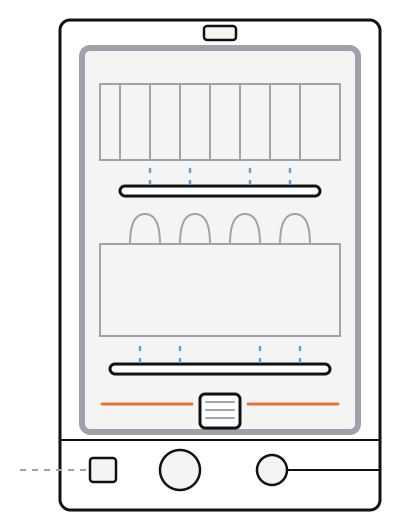
- Door latch and switch
- Won't start.
- Spray arms
- Dishes come out dirty.
- Door seal
- Leaks onto the floor.
- Heating element
- Dishes don't dry.
- Filter
- Gritty dishes, slow draining.
- Water inlet valve
- Won't fill, or leaks underneath.
- Wash pump
- Weak wash, loud hum.
- Drain pump
- Water left in the bottom.
Dishwasher questions
Why are my dishes still dirty?
Usually a clogged filter or a blocked spray arm, and sometimes a weak wash pump. We check them in that order.
Can I use regular dish soap in a pinch?
No. Hand-washing soap foams up in a dishwasher, and the suds can push out past the door seal onto the floor. Use detergent made for dishwashers.
My dishwasher keeps draining and won't start. What does that mean?
A float in the pan under the tub has tripped. Either a leak put water in that pan or the float is stuck with the pan dry, and finding out which takes a look underneath.
Should I keep using it until you come?
If it won't drain, don't run it again, since more water just adds to what's there. If water is reaching the floor or the cabinets, or you smell burning, stop using it and switch off its breaker if you can do that safely.
Do you install dishwashers?
Yes, wherever you bought it, for a flat fee quoted before we arrive. Water hookups aren't included.
Which dishwasher brands do you repair?
Bosch, Whirlpool, KitchenAid, Maytag, GE, Miele, Viking, Thermador, Frigidaire, Kenmore and most other major brands.